Laga nos kontestá e pregunta ku un tèst kòrtiku. E por ta difísil pero purba yega te na final di e tèst i sea honesto ku bo mes. E tèst ta enserá 5 pregunta simpel ku bo por hasi bo mes.
Bo a yega di gaña?Si e kontesta ta si, kiko nos ta yama un hende ku ta gaña, i kuantu biaha bo mester gaña pa bo keda yamá un “gañadó”?
Bo a yega di hòrta algu, mata un persona, òf kometé adulterio? Promé ku bo kontestá e di dos pregunta, Hesus a bisa ku si bo odia un persona, Dios ta mira’bo komo un maton. Hesus a bisa tambe ku si bo wak un persona ku gana di drumi ku ne (fornikashon), E ta mira abo komo un adúltero den bo kurason.
Bo a yega di husa Dios su nòmber en bano (sin rèspèt, manera e palabranan aki, “OMG!” “AI DIO!” “HESU!”)? Esaki yama blasfemia, i e ta algu hopi serio den bista di Dios.
Nos a pasa den 5 di e 10 mandamentunan. Segun Dios su standart moral, bo ta un bon persona si òf nò? Pens’é bon, i sea honesto ku bo mes.
Si bo no ta un bon persona, kiko abo por hasi pa drenta shelu ora bo muri?
Beibel ta bisa ku despues di (bo) morto ta bin e huisio, kaminda Dios ta bai husga kada persona pa tur loke nan a hasi i asta loke nan a pensa. Segun e tèst, kon abo ta pará e dia ei?
Beibel ta bisa tambe ku niun hende no ta bon, ni sikiera unu.
Beibel ta bisa ku tur gañadó lo tin nan parti den kandela (fièrnu) pa semper. I tambe ku tur fornikadó, adúltero, homoseksual, lo no drenta shelu. Na e straf severo ku Dios a pone (fièrnu) pa maldat bo por mira kon malu e ta pa “simplemente” gaña. I kon serio Dios ta tuma maldat.
Si esaki ta bo situashon aktualmente, kiko bo por hasi pa drenta shelu?
Promé ku mi duna’bo e solushon, lagá mi mustra’bo e diferensia entre religion anto un kristian bèrdadero (“kristian” ta nifiká siguidó di Kristu). Tur religion (Testigu di Jehova, Mormon, Islam, èts.) ta bisa (den un forma òf otro) ku nos mester hasi algu òf “bon obra” pa nos kumpra nos salbashon serka Dios, pa nos paga bèk pa e malu ku nos a hasi kontra di Dios. Dios no ta akseptá esaki. Beibel ta bisa ku no tin nada ku abo por hasi pa salba bo mes di fièrnu.
Lagá mi ilustrá religion ku e ehèmpel aki:
Si aki na mundu bo para dilanti un wes pa ladronisia di un outo i un asesinato ku bo a kometé 20 aña pasá, e wes lo laga bo bai liber si bo bis’é ku bo a duna tur bo sèn na hende pober? Of kisas pasó bo a biba manera un hende “perfekto” pa tur e 20 añanan despues di bo krimen?
E wes lo kontestá bo ku, bo no ta pará dilanti dje pa e bon ku bo a hasi pero pa e malu ku bo a hasi 20 aña pasá. E tempu ku a pasa no ta bai yuda bo kaso, e “bon” ku b’a hasi tampoko. No tin nada otro ku a sobra, pero pa paga pa bo krimen den prizòn.
Asina tambe ta ku Dios. E ta un wes perfekto. E no por keda kumprá ku bo “bon obra” nan. E no por pèrmití maldat drenta shelu. Pero tampoko e no ke pa bo bai fièrnu pa semper. Bo pikánan a hasí bo shushi den su bista. Awor kiko ta e solushon?
Dios mes a proveé e solushon pa bo.
Kisas ta algu ku bo a tende di dje kaba, pero nunka bo no a komprondé su nifikashon eterno di bèrdat. Dios a manda su úniko yu, Hesus! El a nanse den kurpa di un hende. El a biba 33 aña sin hasi ni un kos malu i na final di su bida, el a muri kruelmente na un krus. E no a muri pa algu ku e mes a hasi. El a muri pa algu ku abo a hasi. El a tuma bo maldat riba su mes.
Hesus ta Dios i Dios su tata ta akseptá e pago di su sanger pa tur loke abo a hasi robes. Loke Hesus a hasi ta un regalo pa abo i ami por biba pa semper den shelu. Beibel ta bisa ku si bo buta bo konfiansa den Hesus (i lokual E a hasi pa bo) lo bo ta salbá. Enbes di konfia den bo mes, i den religion, buta bo konfiansa den Hesus.
Si di bèrdat bo ta stima i konfia den Hesus, lo bo obedesé su mandamentunan. Nos no ta obedesé Dios su mandamentunan pa nos bira “bon hende”. Nò! Nos ta obedesé su mandamentunan pasó nos stim’E di bèrdat. Beibel ta bisa esun ku nombra e nòmber di Hesus, mester kita for di su maldatnan.
Tur loke ku mi a skirbi ta konta pa ami tambe, mi no ta husgando bo. Beibel ta bisa ku kada persona ku no buta nan konfiansa den Hesus ta husgá kaba.
E por ta difísil pa lesa i akseptá pero sea honesto ku bo mes i pens’é bon. Ora bo muri i para dilanti Dios, lo bo ta sufisiente bon pa drenta shelu?
Hesus a bisa: Ki benefisio un hende tin, si e gana henter mundu i pèrdè su alma? Hesus ta e úniko manera pa haña salbashon, no tin ningun otro nòmber den shelu òf na tera ku un persona por keda salba di su maldat nan.
No tarda! Bo no sa si bo tin un mañan. Beibel ta bisa ku awe ta e dia pa arepentí di tur bo pikánan, p’esei buta bo konfiansa den Hesus. Dios no por gaña! E ta primintí bo ku si bo hasi esaki lo bo haña bida eterno di dj’E komo un regalo.
Si bo ke ta serio ku Dios, e kaminda no ta bai ta fásil. Dios mes lo dunabu e forsa ku bo mester pa vense tur maldat. Lesa su palabra tur dia i konfia den dj’E, pasó E ta bo guia den e bida aki.
“Hesus a kontest’é: ‘Ami ta e kaminda, bèrdat i bida; niun hende no por yega serka Tata, si no ta pa medio di Mi.”
“E kosnan aki mi a skirbi boso ku ta kere den e nòmber di e Yu di Dios, pa boso por sa ku boso tin bida etèrno.”
I encourage Christians to read this post. It’s purpose is to edify the body of Christ. Be perfect as your heavenly Father is perfect.
“I know your works, that you have a name that you are alive, but you are dead.” Who is Jesus talking to here? To the church in Sardis. To a church, not to lost sinners. Is it possible that we can learn something about this account? They have a name, are they popular? The Holy Spirit made it available for all of us to read, why? This must be important.
“Be watchful, and strengthen the things which remain, that are ready to die, for I have not found your works perfect before God.” Ready to die. What could be happening in this church, why are they so near to death?
“I know your works, that you are neither cold nor hot. I could wish you were cold or hot. So then, because you are lukewarm, and neither cold nor hot, I will spit you out of My mouth.” How could something be good and bad? What is Jesus talking about here?
“Because you say, ‘I am rich, have become wealthy, and have need of nothing’—and do not know that you are wretched, miserable, poor, blind, and naked…” This is a key verse, they value that which will not last forever. It appears they are lying to themselves, thinking they are rich, but in reality they are poor. This verse reminds me of many music-centric, prosperity-centric, healing-centric churches (more on this later).
What is the solution that Jesus offers? Let’s read: “I counsel you to buy from Me gold refined in the fire, that you may be rich; and white garments, that you may be clothed, that the shame of your nakedness may not be revealed; and anoint your eyes with eye salve, that you may see.” It’s clear that these people most likely think they are in the faith, but are blind to their actual situation. What do they need to buy? Gold tried in fire. I can see a prosperity-centric church mutilate this verse for their coffers.
When we start reading the new testament, what recurrent themes keep coming forward? To die of ourselves and to be careful with false prophets. Jesus said that false prophets come as wolves in sheep’s clothing, you will not be able to recognize them! If we follow false teachings, we will end up like Sardis and Laodicea.
The following is based on my own observations and research. It starts with a list of questions followed by my answers:
In the Bible we learn about the human nature; deceitful, sin-loving and focused on self. Would an atheist have any problem pretending to be a preacher if they see wealth and fame involved? We could ask: What would an atheist need to do to pretend to be a real prophet? Answer: Quote scripture and say ear-tickling tings in their sermons. About quoting scripture, even satan did this. About the ear-tickling, Paul warned us about this. Where is our discernment? Where is common sense?
What did Jesus teach us? Our love for Him needs to exceed everything else, our love for our family members and ourselves should seem as hatred compared to the love by which we love Him. We should pick up your cross daily and follow Him. Jesus said, “No one, having put his hand to the plow, and looking back, is fit for the kingdom of God.” He also said, he who wishes to save his life will lose it, and he who loses his life for His sake, will save it. He also said, what shall it profit a man to gain the whole world and lose his own soul. What can we learn from this?
What message do we receive when we read the gospels? Do we follow Christ to gain amazing earthly possessions? Do we follow Christ to be healed of our infirmities? Or do we follow Christ because He died for us and gives us everlasting life freely? The message is clear. With this key we can discern between a false gospel, and the true gospel of Christ.
You might be wondering; “this post is called “lukewarm”, why?” It is a sad truth, most churches have become lukewarm. Thinking they are rich, they have become poor. Poisoned with false teachings. Focused on miracles and prosperity, instead of sharing the gospel of Christ with this lost and dying world. Don’t get me wrong, I’m living proof that God does miracles and provides for our needs, but we did not become Christ-followers for this! Did he not die for your sins? He could have given prosperity without dying for you! What did He die for again?
If we focus on the true gospel we will be like the man that builds his house on a rock, nothing can deceive us.
If a well known prosperity-centric church creates popular gospel music, would you listen in? Would you want other people to listen to their music, would you give them a platform? Or would it be smart to ignore anything that comes out of such a place? It might seem harmless at first glace, but it really is not. Many will listen to their teachings because they love their music (this is not simply a theory of mine, I have personally seen it happen).
Are earthly possessions really that important? We should be thankful for what we have, and trust God to provide what we are in need of, aren’t we worth more than two sparrows? Which of the foour seeds got chocked? The one surrounded by thorns. Talking about seeds: I’ve seen some preachers turn these verses upside-down. You have to ‘sow your seeds’ (tithe!), so you can receive a return of investment in the form of a monetary or miracle blessing. Tell me, is this what the Bible teaches? What about lost sinners? I can see someone saying this in response: “they need that money to grow their ministry!”. This kind of thinking is illogical because it is a paradox. Their ministry as it is, is about using the Bible to get rich, they literally teach this, therefore, their even-bigger ministry will do exactly the same in the future, by the way: He who can be trusted with little can be trusted with much! They these ministries create millions of false converts. To set the record straight, the Bible teaches us to plant “seeds” in others, so it may “grow and provide fruit”, it is not talking about tithing for you own gain.
One more thing. Does God love unconditionally, or is there a condition? Can you hop on into heaven without a shred of remorse for past sins? Why do we ask for forgiveness, because we are loved, or because we have rebelled against a holy and perfect God? We need to show this world that sin is exceedingly sinful. It might hurt to hear the truth, it might sound unloving to tell a person that they have sinned against God. It’s just the opposite, we should lovingly show people where they stand in God’s eyes, followed by what God has done for them to save them from eternal punishment.
Based on what I have learned in the Bible I’ll simply end with this advice: Read the Bible daily. Focus on what will last forever and be thankful for what you have. Test every spirit, and lovingly correct those with an erroneous understanding of God’s Word.
“As many as I love, I rebuke and chasten. Therefore be zealous and repent. Behold, I stand at the door and knock. If anyone hears My voice and opens the door, I will come in to him and dine with him, and he with Me. To him who overcomes I will grant to sit with Me on My throne, as I also overcame and sat down with My Father on His throne. “He who has an ear, let him hear what the Spirit says to the churches.””
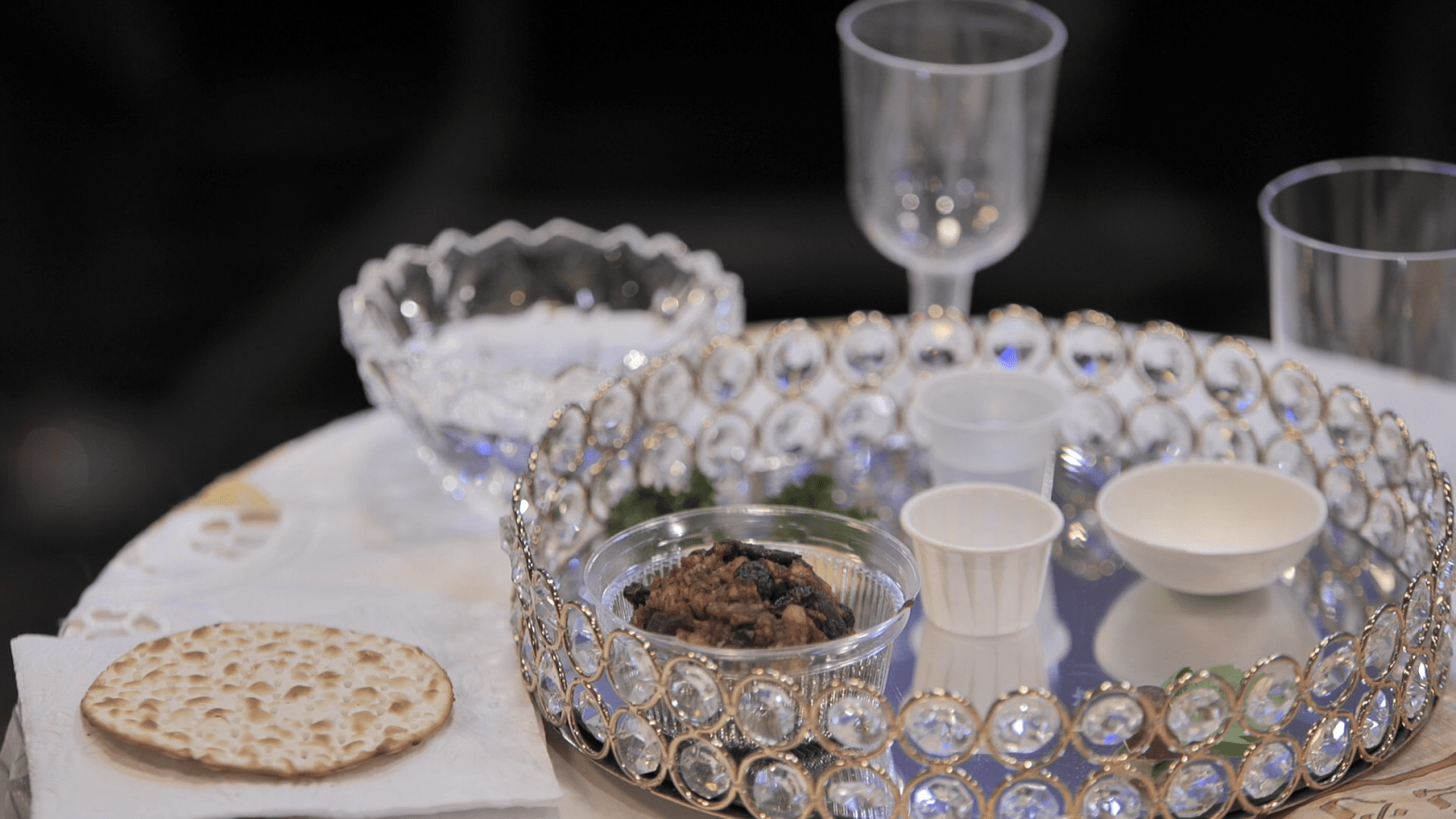
The Passover is symbolic of what Jesus did for all of humanity. In the same way that death “passed over” the houses of Israel that were marked with lamb’s blood during the time of Moses, death has lost it’s grip of all those who are purified and forgiven because of the blood that Jesus shed for us. Romans 10:9 states “If you declare with your mouth, “Jesus is Lord,” and believe in your heart that God raised him from the dead, you will be saved.” (saved from our sins, saved from God’s justified wrath against our sins).
It’s important to mention that those who put their trust in Jesus will therefore ““If you love me, keep my commands.” John 14:15 and ““Everyone who confesses the name of the Lord must turn away from wickedness.” 2 Timothy 2:19. True love is accompanied by thankfulness and obedience.
This is a short video compilation of the 2022 Passover Feast at Hosanna Christian Fellowship.
While celebrating the Passover Jesus said “And he took bread, gave thanks and broke it, and gave it to them, saying, “This is my body given for you; do this in remembrance of me.”” Luke 22:19. We celebrate the Passover as a constant reminder of what Jesus did for us.
For di fiestanan pagano na Roma i Gresia karnaval tin su orígen. Bacchanalia ,Saturnalia ta algun di nan. Riba e fiestanan aki nan tabata duna e dios di kosecha Saturno i e dios di biña Bacchusonor. Durante e fiestanan tur lei ku ta kontrola moralidat ta wordu abolese, e ta enserá sakrifisio di hende na diosnan falsu, sèks parotín i bebe burachi.
Di ei e palabra Karnaval-Bacchanal.
Boso bida tabata domina pa inmoralidat, pashon, buracheria, bakanal, paranda i adorashon di diosnan falsu….
1Pedro 4: 3
Kustumber di Disfrasa
Romanonan tabata konsiderá e luna di febrüari un temporada di limpiesa i ta e luna ku nan ana nobo ta kuminsa, durante kua nan tabatin ku kore ku spiritunan malu di wenter di fríaldat i skuridat, ya asina e klima lo ta sufisiente bon pa un bon kosecha.
Pa kore ku spiritunan malu nan tabata subi kaya ku maskarada bistí i disfrasa, esklavonan i shonan ta kambia di rol ku otro. Despues ku e kustumber a drenta Inglatera e fiesta di Saturnalia a bira ‘feast of fools’ i den otro paisnan Oropeo el’a bira ‘feast of ass’. Den e fiesta nan ta hasi cherche di e nansementu di Kristu, hungando e komedia di pesebre den misa i na final ta grita ‘hee-haw’ na luga di ‘amen’. Den siglo 15 iglesia katoliko a stop esaki, despues ku e parochianonan a sali kompletamente for di man.
Otro kustumber di maskarada i disfrasa, ta bini di Afrika, ritualmente enmaskara, nan ta kana den sirkulo pa kore ku spiritunan malu i pa onra defuntunan.
Kultura pagano den kristianismo
Te ku aña 300 tabata persiguí i kruelmente mata kristiannan na Roma; despues Emperador Konstantino a deklará libertat kristian.
Pa motibu ku no tabata persiguí kristiannan mas i kristianismo a bira algu popular, hopi pagano a bira kristian sin ku nan a tende e Evangelio of berdaderamente kombertí. E fiestanan ta fundá riba kreensia pagano i kultura di Oropa bárbaro, iglesia Katóliko Romano no por a saka nan afó. Finalmente a akseptá nan i nan a bira parti di e aktividatnan di iglesia.
Asin’aki hopi di e fiestanan a drenta kristianismo i haña otro nòmber.
Manera Haloween na òktober, e fiestanan di febrüari a bin haña e nòmber Karnaval. Temporada di karnaval ta kumisa +/- 6 di januari i kaba e djadumingu depues di djarason di shinishi, shete siman prome ku pasku di resurekshon, ‘Easter’ kumisa.
Orígen di e nòmber Karnaval
Ta bini di e palabra latino “Carnevale” Carnem (karni) i levare (kita) ku ta nifiká, kita karni of sin karni.
Karnaval ta un fiesta di delisia i di goso karnal. Hopi kantika di karnaval ta di dòbel sintí ku ta enkurashá hende pa lubidá riba Dios un ratu i djòdjò bai.(ku tur su konsekuensianan) Pues kome pa loko, bebe fuma, hasi kosnan inmoral, promé ku e 40 dianan di reflekshon yega ku yama kuaresma ku ta nifiká arepentí.
Den kuaresma taapstené di karni i paranda pa por keda
limpiá di tur piká ku a hasí durante di e fiesta. (supuestamente)
Asina e kustumber a pasa di Roma pa Spaña, Portugal i Fransia.
Karnaval tambe ta konosí komo Mardi Gras
E nòmber aki ta nifiká “Djamars Vèt” na franses, ku ta e último dia di karnaval i e último oportunidat di gosa di kuminda i bibida promé ku e djarason di shinishi. 1699: Mardi Gras a drenta Merka na New Orleans dor di un eksploradó franses ku yama Iberville.
Na New Orleans te ahinda tin kaya prinsipal yamá na su nomber.
Karnaval na Kòrsou
Oropeanonan ku a bin pa negoshi di sklabitut tabata selebrá karnaval den nan klupnan.
Den añanan ’60 karnaval a subi kaya huntu ku e ritmo di tumba i Kòrsou a haña su karnaval. Awendia nan ta bisa ku e ta nos kultura, komo sifuera e ta algu di siglonan di antepasadonan, pero e no tabat eksistí na Kòrsou mes promé ku esei.
Den kada país karnaval a drenta di un otro forma huntu ku Katolisismo. Esei ta pone hende kere ku e ta un fiesta Kristian, pero e no tin nada di haber ku e Rabi hudiu ku yama Hesus di Nazarèt. Lei Hudiu di Moises ta prohibí e fiestanan aki klaramente, pesei nan no por a bini di Hesus.
Kon Dios por ta di akuerdo anto?
Kon por bendishoná Karnaval anto?
I si e ta algu bendishoná, dikon tantu desgrasia i aktonan inmoral?
Nos tin ku evaluá nos kultura i drecha loke a bai malu. Kriminalidat, bo por bisa, tambe a bira parti di nos kultura, pero nos no por broma kuné. Asina tambe, si nos ke ta un país kristian di bèrdat, nos mester sigui ku e proseso di madures kristian i laga patras loke no ta di Kristu.Hende ta kreá pa adorá i tin komunion ku Dios. Lo ta bon si nos kultura ta enserá: bai iglesia ku kanto i alegria (Salmo 100:4), lesa Beibel, hasi orashon, bisti desente, hasi deporte, yuda pober i enfermo, i lanta nos yunan den bon kaminda. Esaki e ora ei ta trese prosperidat i satisfakshon den nos país.
Nos no tin nodi di sakrifiká nos dignidat, pa supuestamente nos haña entrada di turismo di Karnaval.
I hasta si turismo trese algu di plaka, e mesun sèn ta paga e polisnan overtaim kuné (Naf.150.000 na aña 2006) i Dios sa kuantu mas ta saka pa festival di tumba (Dept. di Kultura), Selikor, Hospital i e embarasonan pafó di matrimonio ku e konsekuensianan pa henter komunidat, etc.
Rei Momo (lesa: Daniel 3):
Te ainda tin adorashon di diosnan falsu.
Den Ñapa Amigoe di februari 2002, tabatin un artíkulo di Rei Momo i su importansia pa hopi hende aki na Kòrsou i di kon nan ta kima e pòpchi na final di karnaval.
E persona ku ta traha e pòpchi ta splika ku Rei Momo ta un símbolo bibu ku un poder misterioso.
Pues no solamente un pòpchi.
E ta bisa:
Ku e ta un fiesta pagano. Antes nan tabata kima un hende bibu, pa bai ku piká di tur hende.
Ku Momo a pèrdè balor ultimamente. Antes ta den òptògt nan ta kargu’é i mas e hendenan alab’é mas bida e ta haña i ora di kimamentu ta tira pida di disfras den e kandela i hasi un deseo.
Ku Gezaghebberòf un persona importante di e pais mester hasi dies deseo durante di e kimamentu, pa kos bai bon ku e isla.
Ku no mag bira lomba pa e pòpchi, pasó e ta konsiderá esaki falta di rèspèt
Ku hopi kos por pasa, dependé kon e kimamentu bai.
E pòpchi ta supose di kima kompleto den 30 min. -ku despues di kima Momo no mag di toka mas pa rèspèt na e pòpchi.
Pues hopi superstishon ku no ta kuadra ku un sivilisashon kristian.
Kiko awor?
Awor nos sa kiko hende ta kere, pero kiko Dios ta pensa di tur esakinan?
Ounke karnaval (i kosnan rondó di djé) no ta e úniko tentashon ku tin, e ta un tentashon fuerte pa hopi hende. E ta un kos ku hende ta spera kasi henter aña ariba pasó sin dje nan bida ta laf, pero nos ke atvertibo i deskurashabo di partisipá. Tin masha hopi otro kos ku bo por hasi ku ta dibertí i ala bes ta bon pa bo, i ta duna muchu mas satisfakshon.
Asta si bo partisipá inosentemente, bo ta kontribuí ku un evento i filosofia ku ta hiba otro hende den pèrdishon.
I bo mes tampoko lo no keda asina inosente mas.
No partisispa na e aktonan inutil di hendenan ku ta biba den skuridat, pero ekspone nan akto.
Efesionan 5:11
Nos no mag di traha niun imagen di niun dios den niun forma, Dios ta kastigá esnan ku ta hasi e kosnan aki te den di kuater generashon.
Eksodo 20:1-6
Niun hende no por sirbi dos dios, lo e odia esun i stima e otro. Lo e pega un na su kurason i menospresiá e otro. Ta imposibel sirbi Dios i mamon.
Mateus 6:24
Hesus di: “Si bo stimami bo ta warda mi manda- mentunan”
Huan 14:23
Ta kima e pòpchi pa e bai ku piká di tur hende. Esaki ta un imitashon satániko di e sakrifisio ku Kristu a hasi. Kristu ta e úniko ku a muri pa nos pikánan.
Huan 3:16
Tambe nan ta bisa ku hende su pikánan ta wòrdu pordoná den kuaresma (ku ta nifiká arepentí), pero Beibel ta bisa “Bai i no peka mas.” Ku otro palabra, mester tin duele di bo pikánan ku e intenshon i deseo sinsero di no hasi meskos mas, sino e no ta arepentimento berdadero, ku konsekuensia ku no tin pordon. Bo no por bai òf partisipá na un fiesta asina kontra Dios, anto kere ku Dios lo komprondé, sabiendo bon bon ku otro aña ta meskos tin.
Dios, komo último Hues, no ke kondená niun hende, pesei den Su amor pa hende, El a proveé un manera pa skapa kondenashon.
Kon nos por haña pordon di nos pikánan?
Anto kon un hende por biba na pas ku Señor?
Lokual Dios a hasi:
Komo bon Hues, un Dios sumamente Santu i Rekto mester kondena na kandela di fiernu tur pekador (kibrado di Ley moral di Dios) (Romanonan 3:10), pero E’la provee un salida for di e kondenashon. (Echonan 17:30)
Hesus a muri na e krus pa paga e but pa bo. El a wòrdu derá i a lanta for di morto. (Romanonan 10:9-19)
Kiko ami tin ku hasi?
Humilia mi mes i atmití ku mi ta un pekador. 2) Arepentí sinseramente di tur mi pikánan, bira lomba pa pika, invitá Hesus bin biba den mi kurason pa E sea mi Señor i Salbador. (Romanonan 10:13)
Bo por bisa: “Señor Hesus, mi ta un pekador i mester di pordon. Mi ta kere i mi ta gradisibu ku Bo a deramá bo sanger presioso na e krus i a paga e preis pa mi pikánan. Mi tin duele di tur mi pikánan i awor mi ta invitá Bo pa bin biba den mi kurason i sea mi Salbador personal. Yenami ku
Bo spiritu pa mi krese den Bo imagen i no peka mas”
Si bo a konfia Señor Hesus komo bo Salbador, bo a kaba di kuminsá un bida nobo kunE.
Kuminsá lesa bo Beibel i hasi orashon tur dia, buska un iglesia kaminda tin otro hende manera bo ku ke biba pa Dios di bèrdat, (Hebr. 10:25) i konta otro di bo eksperensia.
Hesus a bisé: “Ami ta e kaminda, bèrdat i bida; ni un hende no ta yega serka Tata, si no pa medio di Mi.”
Huan 14:6
Copy Right. Produsí 2004, pa S. Flores, Iglesia Hosanna
Salña 135, Tel 465-2562, hosannacuracao@hotmail.com
Esaki ta pasando na Korsou awor aki. Papia awor of pa semper keda ketu (wak ki desaster ta pasando na Merka). LGBT+ lobby ta purbando di kambia lei pa nan benefisio, pa asina indoctrina bo yu nan ku e idealogia LGBT+ (nan mes nos por hanja yu!).
“Die vinden zich in een vergelijkbare situatie (die willen trouwen) dus, gelijke gevallen”.
“gelijke gevallen” en “vergelijkbare situatie” zijn twee verschillende dingen.
Alles rust op die ene punt. Hij verandert het definitie van “gelijke gevallen”.
Het zijn geen gelijke gevallen. Twee kunnen kinderen krijgen en twee niet. Twee zijn in hoog risico groep voor HIV ect ect, en twee niet. (Man/Vrouw vs Man/Man,Vrouw/Vrouw)
Waarom beschermen we het huwelijk eingelijk? Waarom krijgen ze 800+ rechen? Om (voor het meerdere gedeelte) kinderen goed op te voeden! Daarom bestaat atrikel 26.
Wie gaat uiteindelijk leven met hun kinderen (hetero huwelijk)? De rest van het bevolking! Daarom willen wij (het bevolking) een gezonde familie.
En wie moet uiteindelijk de prijs betalen voor kostbare HIV (ect ect) medicijnen? SVB, dus alweer, het bevolking!
Yamá: ‘Dia di dianan’ Pa hopi e ta un temporada di bunita memoria.
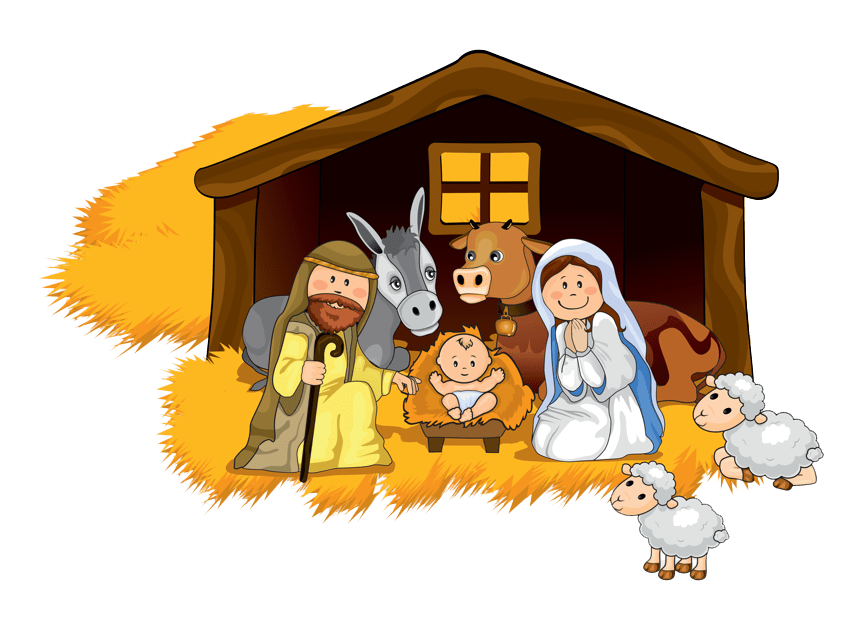
E selebrashon di Kristu Su nasementu na Bètlehèm.
Pa otronan e ta un bon oportunidat di hasi negoshi.
I pa algun otro tambe e tin nifikashonnan pagano.
Kon abo ta selebrá Pasku?
Historia, mito i tradishon
Den e Hemisferio Nort den desèmber, ora solo ta mas leu for di ekuator, riba 21 di desèmber, ta e dia di mas kòrtiku i e anochi di mas largu di aña. E dia aki ta wòrdu identifiká komo ‘Winter Solstice’. Den siglonan antaño pa e mundu pagano esaki tabata e dia mas apropiá pa praktiká i selebrá e obranan di skuridat.
Ta riba e dia aki Pasku tin su origen den Oropa.
Na Scandinavia nan tabata adorá e dios di seksualidat i fertilidat ku yama Yule, un selebrashon di 12 dia.
Un pida palu grandi tabata wòrdu dekorá i sendé na kandela, pa keda kima 12 dia. Nan tabata sakrifiká hende i bestia den e kandela riba kada un di e dianan akompañá ku fiestanan parandero, pa hasi kontakto ku spirítunan i pa sigurá ku solo lo sali despues di wenter.
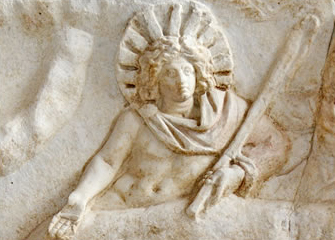
Na mes momento den Emperio Romano, nan tabata adorá diosnan falsu manera Dionysus, Attis, Bachus, e diosnan di fertilidat i di biña. Un otro dios ku yama Mithra, e dios di solo i lus ku nan tabata adorá pa un grupo di hende ku influensha, a nase 25 di desèmber. Nasementu di Mithra ta simbolisá regreso di solo, despues di wenter i segun solo ta bira mas fuerte, Mithra tambe ta krese. Durante e selebrashon pa Mithra nan tabata pèrmití tur sorto di krimen, perversidat seksual i bagamunderia. Asta muchanan tambe ta partisipá.
Mithra: dios di solo, segun fábula a nase 25 di desèmber
Na aña 270 AD Emperador Aurelian a hasi e fiesta mas ofisial i a deklará 7 dia di fiesta kulminando ku un dia di duna regalo riba 25 di desèmber, selebrando nasementu di dios di solo.
E fiesta aki despues a bira e fiesta di Saturnalia, onrando e dios
Saturno, e dios di abundansha. Di e ‘Saturn’ nos tin e palabra ingles ‘Saturday’(djasabra). Despues ora Roma a invadí Britania (Inglatera) nan kustumbernan a drenta einan tambe. Saturnalia na Inglatera a bira konosí komo e fiesta di bobonan ‘feast of fools’.
Paganismo den Kristianismo
Den siglo 4 AD e gobièrnu a aprobá e iglesia na Roma pa na luga di stòp e fiestanan pagano, adaptá nan den Kristianismo ya asina por gana e paganonan pa kombertí na Kristianismo, pero e paganonan a sigui selebrá nan fiestanan mesklá den Kristianismo. (p.e.Halloween i Karnaval)
Asina iglesia a konfundí historia dor di pone Hesus su nasementu kai pareu ku esun di e dios pagano Mithra ya ku Hesus no tin un fecha spesífiko di nasementu menshoná den beibel.
Asina e nasementu di e dios di solo a bira nasementu di e Yu di Dios. Den siglo 7 AD Papa Gregory I a ordená Augustine pa inkorporá tur fiesta i práktikanan pagano den iglesia Romano. E fiesta di Saturnalia a bira ‘Christ Mass’ (Misa di Kristu) ku pa nos ta Pasku.
Pasku na Inglatera i Merka
Durante ‘Middeleeuwen’ (Edat Medio) Pasku a yega su punto kulminante kaminda tabatin aktonan seksual riba kaya, krimen i ritualnan pagano di e Druidonan.
E fiestanan sangriente aki a sali asina for di man ku den 1652 despues di e ehekushon di Rey Charles I, nan a para selebrashon di Pasku na Inglatera, kaminda a sigui un reforma religioso, dirigí dor di e Puritano Oliver Cromwell.
E Puritanonan a tuma e mandato bíbliko ku ta rekerí pa Kristianismo ta puru i separá for di paganismo hopi na serio.
Apesar di nan esfuerso, selebrashonnan a keda den skondí. Den aña 1656 despues di solamente 4 aña ku nan a prohibí e fiestanan, e pueblo a demandá pa legalisá e fiesta di Pasku. Ora Charles II a subi trono ela restourá e monarkia Ingles i huntu kuné e selebrashon di Pasku. E Puritanonan a sali for di Inglatera i bai Merka, pa nan por ta liber pa adorá Dios sin ta bou di herarkia i korupshon ingles. Nan a bin ku e konosementu di práktikanan pagano i nan peligernan, i pa 200 aña nan a logra tene e fiestanan pagano for di Kristianismo. Reverend Cotton Mather a bisa: “Bo por, ku un konsenshi limpi, pensa ku bo Salbador Santu ta wòrdu honrá ku bebida stèrki, bagamunderia i un misa ku ta pas pa e diosnan Bachus i Saturno?”
Pero e pueblo general su deseo pa fiesta na un manera mundano a pone ku nan a kuminsá selebrá Pasku bèk den e forma pagano. Den 1828 e fiesta di Saturnalia òf Pasku a sali asina for di man na New York ku pa promé biaha a pone polis riba kaya pa kontrolá e fiesta. Den hopi estado na Merka e tempu ei, no tabata selebrá Pasku den grandi, asta na hopi kaminda e tabata prohibí.
E últimonan pa selebrá Pasku tabata e iglesianan pero despues nan tambe a kuminsá inkorporá esaki den nan ‘zondagsschoolnan’.
Tabata e buki di Charles Dickens ‘A Christmas Carol’ ku a graba e fiesta di Pasku den kurason di tur Merikano.
Ora Charles a bin Merka den 1857 pa promové su obra, ela konta e historia dilanti un gran oudiensia. Akinan e fiesta di palu di pasku, famia i lus a haña otro nifikashon i bira iresistibel pa no partisipá. Na 1875 e Puritanonan a pèrdè e bataya i 1890 tur estado Merikano a vota pa hasi Pasku un fiesta legal.
Kustumbernan di Pasku
12 dia di Pasku / dia di Tres Rei:
E selebrashon di 12 dia di pasku a sali for di e selebrashon di e ídolo Yule, kuminsando 26 di desèmber pa 6 di yanüari.
Despues a skohe 6 di yanüari komo ‘dia di tres rei’, e dia ku supuestamente e tres reinan a bin duna Hesus regalo, pero Beibel ta bisa ku nan tabata sabionan di oriente. E no ta bisa ni tres, ni reinan. Tampoko ku nan a trese e regalonan den e stal, pasobra nan a yega na e kas kaminda Hesus tabata Mateo 2:11(Beibel Santu) mas o ménos 2 aña despues. Tin indikashon ku e sabionan tabata desendiente hudiu ku tabata na Babilonia, for di tempu ku nan a wòrdu hibá den eksilio den tempu di Nebukadnèsar 586 aña promé ku Kristu. Ta e hudiunan tabata sa di e profesia di e strea (E Mesias) den Numbernan 24:17. Ademas Daniel, ku tabata e sabio prinsipal di
Babilonia, ta menshoná eksaktamente den ki aña e Mesias lo nase.
Fecha di Hesus Su nasementu:
Lo tin un motibu dikon Beibel no a bisa ki fecha Hesus a nase, pero pa motibu ku, entre otro, wardadónan di karné temporada di wenter no ta sali anochi ku nan karnénan, nos por konkluí ku E no a nase den desèmber. Tambe e Romanonan lo no a eksigí un senso di e pueblo di Israel den wenter, pero mas bien despues di e kosecha di zomer ora ku e senso lo no afektá e ekonomia muchu.
Por kalkulá e fecha berdadero, ku probablemente Hesus a nase den sèptèmber durante e fiesta di Tabernakel. Lev. 23 Sin bai muchu profundo, den Lukas 1:5 tin skibí ku e saserdote
Zacharias tabata di e grupo di Abias. For di 1Kron.24:10 nos por
mira ku e grupo di Abias tabata e di ocho grupo pa sirbi un siman den e promé mitar i un siman den e di dos mitar di e aña hudiu, ku ta kuminsá den nos Mart òf Aprel. Durante su promé turno di sirbi den Tempel (± yüni) e angel a bis’e ku e lo haña un yu hòmber, ku a bira Juan Boutista.Gabriel a wòrdu mandá serka Maria ora ku Elisabèt, kasá di Zacharias tabata seis luna na estado, pues den desèmber; 9 luna despues, Hesus ta nase den sèptèmber.
E lampi sendé:
Tabatin kustumber di buta un lampi di zeta sendé den bentana pa laga bisiñanan sa ku nan tambe ta partisipá na e fiesta pagano di e dios Yule. Na Merka esaki a kuminsá dor di imigrantenan di Scandinavia.
Dòrná ku mata i taki di palu:
Durante Saturnalia nan ta dòrna kasnan ku baranan di ‘Holy’ (un tipo di palu)i asina rekonosé e poder di e dios di naturalesa, pa e por protehá e kas. Segun ritualnan di Wicca, trahando e matanan den forma di sírkulo ta aksentuá e poder mágiko. Ta p’esei e krans.
Mistletoe:
Ora Mistletoe wòrdu uza den un ritual di Wicca e por influensiá un muhé pa deseonan seksual. Esaki a trese e kustumber di kologá un Mistletoe riba kozein di un porta, pasobra si topa un hende muhé den e porta mester dun’e un sunchi i e no mag resistí.
Palu di Pasku:
Por debatí kiko ta e origen di palu di pasku pero sigur ta, ku e ta di origen pagano kaminda e palu ‘Evergreen’ semper a wòrdu adorá komo un dios.
Motibu ta ku e ta e úniko palu ku no ta muri durante di wenter, pero ta keda bèrdè i bibu kaminda ku otro palu i matanan ta mustra seku i morto. Pa nan e tabata representá bida eterno i speransa pa e aña benidero.
Durante wenter nan ta kòrta e palu, tres’e paden i dekoré komo un idolo pa adorá. Segun nan, tin spiritu ta biba den e palu ku ta trese kalor den kas durante di wenter.
Druidunan tabata dekorá e palu ku diferente opheto di prosperidat, p.e.: sèn pa rikesa, ‘charms’ pa amor i fertilidat, bèlnan pa sa si e spirítunan ta presente i e takinan ta dekorá ku kuminda pa trit e spiritunan.
Den siglo 16 AD na Alemania e tradishon di palu di pasku a kuminsá den Kristianismoora ku Kristiannan a tuma e kustumber over for di e paganonan, dor di trese palu di pasku dorná den nan kas. Rei George I di desendiente Aleman a trese e kustumber Inglatera.
Den 1848 ‘London Illustrated News’ a publiká e potrèt di reina Victoria i e famia real banda di un palu di pasku dekorá, ku konsekuensia ku den un par di aña kasi tur kas naInglatera tabatin nan mes palu di pasku pa demostranan rèspèt na e monarkia Ingles. Imigrantenan Aleman ku a bai biba Pensilvania a trese e kustumber Merka na 1830 i pa 1890 adornonan di pasku tabata wòrdu importa for di Alemania. Dimes depues e kustumber a bin Korsou.
Santa Claus, San Nikolás i Zwarte Piet
San Nikolás ta un bon ehèmpel di paganismo den Kristianismo.
E ta konosí komo un meskla di diferente tradishon.
Den mayoria kultura lo bo tende di e tradishon di e ‘dios di kurason’ ku ta protehabo, yudabo kushiná, sòru pa e yunan, etc.
Durante un temporada den wenter, e dios ta bin bistí na korá, bahando den chimenea pa rekompensá esunnan ku a agrad’e i maldishoná sobrá.
Na Skandinavia San Nikolás/Santa Claus/Papa Pasku su orígen tabata den e forma di Woden, e dios di tormenta.
Di Woden nos tin e palabra Ingles ‘Wednesday’ (djarason) Un homber grandi ku un barba largu ku ta habitá den selva i durante temporada di ‘Wenter Solstice’ ta biaha den shelu riba un schimmel (un kabai blanku), disidiendo ken lo muri i ken lo biba. P’esei mayoria hende na Skandinavia tabatin miedu di e dios aki.
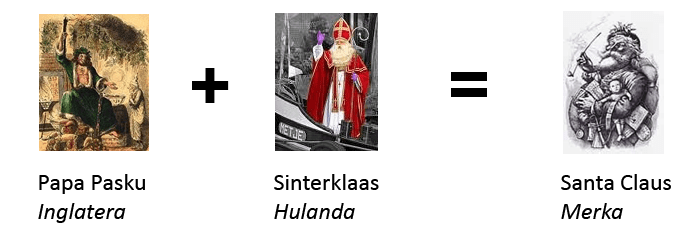
Na Inglatera dios Woden, dios di tormenta a bira Papa Pasku
Na Inglatera Woden a kambia bira Papa Pasku ku ta dòrná ku takinan di ‘Holy’ i ta biaha di siudat pa siudat, bebiendo fuma, tumando parti na e fiesta di bobonan; Saturnalia ku a bira Pasku. Hopi biaha e ta wòrdu akompañá pa un chubatu ku kachu; e símbolo di satanistanan.
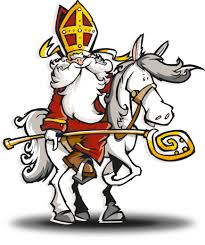
Segun e tradishon di iglesia katóliko tabatin un obispo Turko ku yama San Nikolás (280-342), konosí komo e santu patriotiko di nabegantenan. Na Hulanda nan tabata uza su historia pa koregí muchanan mala mucha.
Despues ku e historia di San Nikolás a meskla ku Woden, su imáhen a bira ku e ta un hòmber grandi ku barba largu blanku i ta kore riba un schimmel. Nikolás ta nifika: esun poderoso.
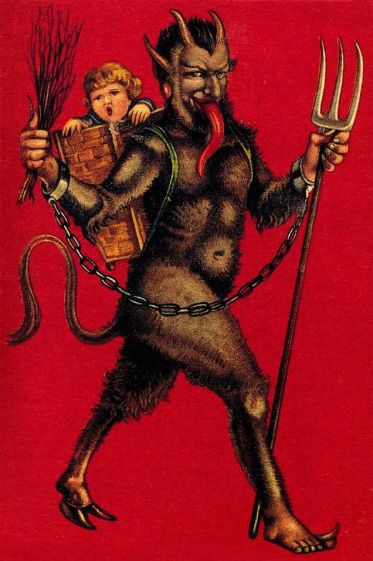
Krampus, Beelzebub, Zwarte Piet, Knecht Ruprecht
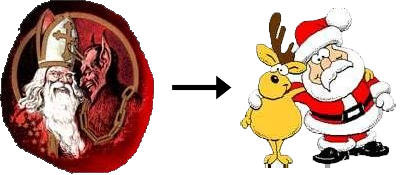
Tabatin un rumor, ku San Nikolás a kapturá satanas mes i hasié su katibu personal.
Den diferente kultura e katibu ta wòrdu konosé komo ‘Krampus’, ‘Beelzebub’of ‘Zwarte Piet’(despues ela kambia pa nifiká un katibu di Moro)
E nòmber Aleman ta ‘Knecht Ruprecht’, deskribí komo un kriatura ku kachu horibel.
Tin asta kultura kaminda ta Knecht Ruprecht, ta protehá niño Hesus. Den 1620 imigrantenan Aleman i Hulandes a bin Merka i asina trese e tradishon di San Nikolás i Zwarte Piet, pero tabata te 200 aña despues ku ela bira un tradishon na Merka.
Na Hulanda: San Nikolás i Zwarte Piet
E eskritor bestseller Washinton Irving a uza su influensha pa promové San Nikolás den un historia ku a bira hopi popular
‘Bracebridge Hall’.
Despues un ministro Episkopalian yamá Clement Clark Moore a skibi ‘A visit from Saint Nicolas’ ku den 1822 a wòrdu re-eskribí i yamá: ‘The night of Christmas’ E historia ta basá riba imigrantenan hulandes i aleman ku a bai biba Merka.
Originalmente ela skirbié solamente pa su yunan pero ora su historia a wòrdu publiká den ‘Choice Sentenal’ na New York ela a bira inmediatamente hopi popular.
Den e buki e bishop San Nikolás a bira un homber ku podernan supernatural ku yama Santa Claus.
Asta Clement a remplasá Zwarte Piet of Knecht Ruprecht pa ocho biná ku kachu, ku tin poder di magia pa bula.
Clement Moore a bira hopi preokupá ku e enfasis lo ta riba Santa Claus i no riba Kristu.
Dor di esaki ela nenga di tuma krédito pa e historia.
Pero e historia a bira asina popular ku e no por a resistié mas.
Na Merka San Nikolás i Zwarte Piet a bira Santa Claus i Rudolf
40 aña despues e ilustradó polítiko di ‘Harpers Weekly’ Tomas Nest, a dòrna Santa Claus den mente di mundu dor di kombiná un pintura di Papa Pasku y San Nikolás, pintá ku e faha pretu i bibá na nort pol. Den 1880 Santa Claus a bira kompletamente sekular i a bira negoshi grandi pa negoshantenan.
E amor pa sèn i miedu pa pobresa a bira mas importante ku Kristu mes. Awor Hesus a wòrdu remplasá pa Santa Claus den kurason di e muchanan. E amor ku nan mester tin pa Kristu nan tin pa Santa.
Santa tin poder sobrenatural, e sa pasado i asta futuro di tur hende.
Den su buki e tin tur kos skibí.
E ta bula den laira, den un anochi e ta bishita tur kas di mundu. Un mito semper ta keda kambia segun nan ta keda sigui konta e historia.
E mito a kuminsá ku un dios ku yama Woden, na Inglatera ela bira Papa Pasku i su chubatu, na Hulanda San Nikolás i satanas of Zwarte Piet, despues na Merka nan a kombiná nan tres i yam’e Santa Claus ku ocho biná ku kachu.**
E tradishon pagano ta sigui kambia, pero Dios Su palabra no ta kambia nunka.
Durante Pasku tambe tin hopi tristesa i soledat, ku konsekuensia ku tin un oumento di suisidio den desèmber.
Mirando e echo ku hende ta habrí pa skucha evangelio durante Pasku, nos por uza e okashon aki pa kompartí e motibu real dikon Hesus a bini mundu.
No ta pa keda un bebi ela bini, sino pa krese sin peka i muri pa nos pikánan. Piká ta trese kondenashon di E Hues hustu. Rom. 8:1 P’esei nos tin ku aseptá Hesus den nos kurason, pa nos por ta sigur di nos salbashon.
Atmití ku bo ta un pekador. (Romanonan 3:10,23)
Arepentí sinseramente di tur bo pikánan. (Echonan 17:30) 3) Kere ku Hesus a muri p’abo, a wòrdu derá i a lanta for di morto. (Romanonan 10:9-19) 4) Invitá Hesus bin biba den bo kurason pa E sea bo Señor i Salbador. (Romanonan 10:13)
5) Buska un iglesia kaminda tin otro hende manera bo ku ke biba pa Dios di bèrdat. (Hebr. 10:25)
Bo por bisa:
“Señor Hesus, mi ta un pekador i mester di pordon. Mi ta kere ku Bo a deramá bo sanger presioso i a muri pa mi pikánan. Mi ta arepentí di tur mi pikánan i awor mi ta invitá Bo pa bin biba den mi kurason i sea mi Salbador personal.”
Si bo a konfia Señor Hesus komo bo Salbador, bo a kaba di kuminsá un bida nobo kunÉ.
Kuminsá lesa bo Beibel i hasi orashon tur dia, buska un iglesia kaminda nan ta siña ku Beibel ta e palabra di Dios, konta otronan di bo eksperensia.
Hesus a bis’é: “Ami ta e kaminda, bèrdat i bida; ni un hende no ta yega serka Tata, si no pa medio di Mi.” (Huan 14:6)
What are these companies spending their resources on?
The movies that these companies are making, what do they promote?
My opinion and advice
Is there a good alternative?
1. What should our priority be?
We as Christians know what is good and what is evil. We should be the light of the world, but if our eyes are dark, our whole body will be in darkness (Matthew 6:23). How can we speak against popular evils such as abortion, same-sex marriage, euthanasia, drugs, stealing, lying and more if we support the very companies that promote these ideas?
2. What are these companies spending their resources (your money) on?
I will mention only a few to save time. The list does not stop here.
Companies in support of same-sex “marriage”:
Viacom (Paramount, Nickelodeon), Discovery Channel, Warner Brothers (Looney Tunes, Flintstones, Scooby-Doo, DC), Apple, Starbucks, Google, Meta (Facebook), eBay, Nike, Microsoft, Instagram, Disney, Amazon and more.
Companies that support abortion:
Amazon (Netflix), Apple, Comcast, Meta (Facebook), Paramount, Starbucks, Warner Brothers, Netflix (Amazon), Sony, Disney, Microsoft and more.
3. The movies that these companies are making, what do they promote?
All under the name of “harmless entertainment”. These movies promote murder, theft, lies, fornication, blasphemy, same-sex marriage, gender dysphoria, abortion and more.
4. My opinion and advice
How can I or any other Christian, while knowing these facts, continue watching movies that promote the very evils I am trying to protect people from? We as Christians want to be the light of the world, we want people to see a difference in us, so that they will glorify our Father in heaven (Matthew 5:16). We want people to be convicted of their sins and seek Jesus as their savior.
We are hypocrites (something that Jesus spoke a lot about) if we continue supporting these evil companies for our pleasure.
Imagine for a moment that Jesus was sitting next to you while you are watching a movie where the main actor blasphemes His name over and over again. Or where the objective of the main character is to rob a bank, kill or commit adultery. Or if the movie you are watching promotes same sex-marriage. What would He think of you?
I used to go to the movies at least once a week, I have seen thousands of movies, many times over. I have played hundreds of videogames and in some cases I was one of the “best” at them. If I can quit giving my money away to the cinemas, if I can quit watching evil movies, and if I can quit evil videogames so can you. One thing you have to remember, you cannot succeed on your own strength, pray and ask God for help. Not by might, not by power, but by the Spirit.
To be absolutely clear, if you knowingly watch movies, play videogames or listen to music created by companies that support evil then you are supporting evil, remember that God will hold you accountable for the decisions you make in this life.
5. Is there a good alternative?
Yes. Christians around the world are making movies that are based on the Bible and support good moral values. If you buy these movies, you are financially helping their creators to keep doing the good work they are doing (instead of, for example, helping Disney doing satan’s work).
I can recommend one good Christian alternative streaming service: www.answers.tv
Answers.tv is not mindless entertainment. There are good moral values to be learned, scientific videos, documentaries, reviews, and more.
Ages before the birth of Christ the countries England, Scotland, Germany, France and Ireland were inhabited by people called Celts. They celebrated their new year called Samhain on the 1st of November which was the end of the summer and the harvest time. They believed that on New Year’s Eve, the 31st of October, spirits of all those who died throughout the preceding year came over into the world of the living to possess their souls so that they would have a living body in the new year.
The priests called Druids offered animals, harvest and even people to their gods. They kindled a bonfire or bone fire (fire of bones). They put all the bones they had offered together, laid a fire to assure that the sun would rise again after the winter and to chase away the wicked spirits.
The custom to go from house to house started this way.
The Celts had a great fear for the spirits, that’s why they put fruit and food in front of the house to satisfy them. Later the custom changed when the beggars in England went from house to house to ask for ‘soul cakes’ (a square bread) in exchange of which they would pray for the deceased souls of the families.The phrase trick or treat is more modern and started being used in the year 1930.To chase away the wicked spirits they put in front of the house a pumpkin with a demonic face carved out in it, thinking that the spirits would get scared if they saw something uglier than themselves.The custom of the pumpkin comes from an Irish fable about a cursed soul called Jack O’lantern.
Where does the name Halloween come from?
In the year 43 AD Rome invaded the greatest part of the Celtic territory. In the year 500 AD when Catholicism became the world religion the Christian influence spread in the territory of the Celts, but the pagans continued to celebrate their customs. That’s why, to replace the celebration of the pagans (instead of stopping them and teaching them better), Pope Gregory III moved in the year 800 AD the All-Saints Day or All Hallows Day from May 13th to November 1st which coincides with the new year of the Celts. They called the eve of the all-saints day which is October 31 All Hallows Eve and finally it became Halloween. The danger is that until now many customs of the Celts have continued and got mingled with Christianity.
Where does the custom to disguise come from?
They disguise as everything that is frightening so the wicked spirits, that according to their believe are running around loose, do not recognize and harm them. Nowadays children dress up as demon, witch, death’s-head, ghost, etc. and go from house to house. In order to get sweets they have to say “trick or treat”. And who are they imitating?
What should we do?
Perhaps you’re thinking, but I’m not sacrificing, I’m not a Satanist, I just have fun. But you’re having fun with things that has to do with death and suffering. Does this please God? With a feast one celebrates something as a birthday or a success; there is a reason to come together, but what is being celebrated with Halloween? Is there something to celebrate? Although we recognize that nowadays people organize feasts because they miss the sociability instead of improving the atmosphere at home, family disasters keep on augmenting. If you are a Christian mother or father and you let your children participate in this feast, you’re playing in the area of Darkness.
What does God say? We cannot participate in the works of darkness;
And have no fellowship with the unfruitful works of darkness, but rather expose them.
Ephesians 5:11 [NKJV]
If you are a child of God separate yourself from these things;
Rather, that the things which the Gentiles sacrifice they sacrifice to demons and not to God, and I do not want you to have fellowship with demons.
1 Corinthians 10:20 [NKJV]
We have the promise that God protects our children. If we allow them to participate in these feasts the promise of God is no longer valid. You as a parent are responsible for the spiritual life of your child; just stand still and think for a moment. What positive is there in a feast that contains: Black magic, spirit and … death? In what way do these practices please God? If you were to draw a picture for your child to color, would you draw a death’s-head? But if at a feast they have your child disguise himself with something diabolic, it is very normal. Don’t you think that’s strange?
Therefore,Scripture says:
My people are destroyed for a lack of knowledge.
Hosea 4:6 [NKJV]
We are seeing enough tragedies and death in our land to play with and even celebrate death. We want things to go well for us. We want our land to be blessed. How is that possible if we ourselves open the door for satanic influences? Be wise and abstain from these kinds of practices. Let’s seek God’s face and He will restore our land. 2 Chronicles 7:14 If you are sorry if you ever participated or did other kinds of these things, repent of your sins, ask Christ Jesus to come live in your heart and He will lead you into all truth.
Dios stima tur hende, pero Dios odia pika. Beibel ta bisa ku tur hende mester para dilanti Dios riba e dia di huisio. Hebreo 9:27 ta bisa ku tur hende ta hanja un chens di bida, i despues ta bin e huisio.
Bo a kibra kualke unu di e 10 mandamentu nan? Kristu Hesus ta e uniko persona ku por paga e preis pa bo pika nan. Hesus a muri na e krus di Calvario pa abo por bai liber i hanja bida eterno. E a paga e preis ku niun di nos mes no por paga (Beibel ta bisa ku e pago di pika ta morto). Nos bon obra nan no ta bai juda nos riba e dia di huisio.
Awe mes, pensa over di esaki, pidi Dios pordon pa tur bo pika nan, pidi Dios pa kambia bo bida. Buta tur bo konfiansa den Su yu i nos uniko Salbador, Kristu Hesus.
Danki na tur hende ku a komparti e post aki! Nos meta ta pa mas hende posibel por tende e bon notisia i hanja salbashon. Beibel ta splika ku e bon notisia ta poder di Dios ku ta salba alma (Romanonan 1:16).
Despues di lesa un par komentario, a nota ku tin hende ku un komprondementu eroniko tokante salbashon, shelu, Hesus i Sabbath.
Korda ku den testament nobo, i tambe den Revelashon, un kos ku lo ta un problema grandi ta leer i proferta falsu nan. Semper test tur kos ku hende bisa ku loke Beibel ta bisa!
Pa e ta duidelijk:
* Ta existi un fiernu i shelu. Dios lo huzga tur persona. Esnan ku a kere den Su Yu Hesus lo ta salba i hanja bida eternu den shelu. Esnan ku no ta kere den Su Yu lo lo por mira Dios, lo no por drenta shelu, i lo sufri den fiernu pa semper.
* Un persona ku ta kubri (i sushi) di pika no por mira Dios. Solamente loke Hesus a hasi pa nos por limpia nos di pika. Nos bon obra nan lo no yuda ku net net nada. Nos bon obra nan ta mustra ku nos tin fe den Hesus, i ku nos ta gradisido ku E a salba nos.
* Beibel ta splika ku Hesus ta Dios, i ku Hesus ta Yu di Dios. Tres persona (huntu ku Spiritu Santu, i un Dios).
* Sabbath no ta algu ku nos mester kumpli kune pa hanja salbashon. Nos no ta kontra di Sabbath.
Algun versikulo importante tokante e topiko nan aki:
Huan 1:1 “Na kuminsamentu e Palabra tabat’ei kaba i e Palabra tabata huntu ku Dios; e Palabra tabata Dios mes. 2T’É tabata na kuminsamentu huntu ku Dios.”
Hebreonan 10:27 Ta splika ku no tin re-encarnashon. Tur hende ta biba un biaha, i despues ta bin e huisio.
Romanonan 10:9 “Pasobra si ku bo boka bo proklama ku Kristu ta Senor i den bo kurason bo kere ku Dios a lant’e for di morto, lo bo ta salba”.
Mateo 12:50 “Ken ku hasi boluntat di mi Tata ku ta den shelu, ta mi ruman homber , mi ruman muhe, mi mama”.
Filipensenan 3:20-21 “Ma nos patria ta den shelu; fo’i djei nos ta warda nos Salbador, Señor Hesu-Kristu, bini! E lo transformá nos kurpa mizerabel den kurpa glorioso, meskos ku esun di djE. Pa hasi esei lo E usa e poder ku E tin pa someté tur kos na su outoridat.”